Gotta Go Lean Blog

FTE

“Full-time equivalent”, or “FTE” is a way to normalize staffing decisions. In the modern workforce, particularly in administrative environments, employees perform multiple functions or don’t work standard 9-to-5 schedules. Using FTE to determine the size of the workforce assigned to a process makes accurate productivity and cost measures possible. A full-time equivalent person is simply 40 hours of working time. This could be a single person working in one role, or four people each working Read more…

Dashboard

Businesses have an incredible amount of information flowing into them. It is often impractical for people to process the data and make quick assessments and corrections to the business without some sort of simplification tool. One such tool is the dashboard. It is simple view of the key metrics of a business. One can take a quick look at it and see the state of the company—much like one can glance down at the dashboard Read more…

Is Toyota Still the Champ?

Toyota has unquestionably been instrumental in promoting Lean principles through its production system. The evolutionary, and sometimes revolutionary, path it has followed has been emulated by many, and is often held out as the beacon of Lean in the continuous improvement community. In his 2004 book, The Toyota Way, Jeffrey Liker clearly established Toyota as the dominant player in the auto making world. He laid out a series of metrics that were hard to argue Read more…

Inspect Your Inspections

Any time I hear the word ‘inspection‘, I think failure. An inspection is an admission that you haven’t been able to build quality into a production process. That said, I think there is a place for inspections, as long as there is recognition that they wasteful. But since even wasteful processes can be improved, here’s a simple trick that can test if you are giving your inspectors enough time to find all the defects coming Read more…

Activity Ratio

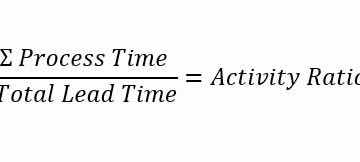
The activity ratio is a measure of how quickly work moves through a process. It is simply the sum of the process times divided by the total lead time. For example, if the processing time was 30 minutes and the lead time was 2 hours, the activity ratio would be .25 or 25%. The activity ratio is a good gauge of how much time work is sitting idle in a value stream. As a result, Read more…

Balanced Scorecard

The Balanced Scorecard is a management tool developed by Robert Kaplan and David Norton and published in their book titled The Balanced Scorecard. The book focuses on four areas: Financial performance Customer knowledge Internal business processes Learning and growth The term “balanced”, as explained in their preface, is many faceted. It compares short and long term, financial and non-financial measures, lagging and leading indicators, and external and internal performance. The authors stress that the balanced Read more…

Don’t Debate Something That Can Be Measured

In Lean, there are certainly some things that are open for debate. How aggressively to set goals, for example. When the criteria used to select a course of action are different for both sides, there is likely to be a disagreement. (See my recent video on using a decision matrix for more info on that topic.) But in many cases, two factions argue something that is clearly measurable, and in many cases the argument isn’t Read more…

Predictive Problem Solving

I answered a question on a forum earlier this week, and it has had me thinking. It asked how we thought efforts to improve quality would be different in the future. My answer was that I saw a more predictive approach to quality. That just means that more companies will make the effort to identify the drivers of poor quality, and track those, rather than put all their resources into identifying faults. For example, perhaps Read more…

Future State Value Stream Map (VSM)

A future state value stream map (VSM) is simply a projection of how a value stream should look in the future, generally 6 to 12 months. When a current state value stream map is created, problem areas become apparent. The bottlenecks where inventory piles up, processes with poor quality, and operations requiring excessive coordination should all be marked with kaizen bursts, which indicate areas of focus for the future state value stream map. Operations where Read more…

Murphy’s Law

Murphy’s law has been stated in various ways, but essential boils down to “If something can go wrong, it will.” There are many addendums to the law, such as “in the worst possible way” or “at the worst possible time”. The origin of Murphy’s law is somewhat murky but seems to involve an engineer named Edward Murphy and a failed test on g-forces. There are also earlier references to a similar “law” dating back to Read more…