Gotta Go Lean Blog

Occam’s Razor

The common interpretation of Occam’s Razor is that when all other things are equal, the simplest solution is probably right. More accurately, but in less common use, Occam’s Razor says that one should choose the hypothesis that makes the fewest new assumptions. In either case, Occam’s Razor is a tool that can be used to assist in decision making. Occam’s Razor is an important concept to remember when doing problem solving. In the analysis steps Read more…

Objective vs. Subjective

Being able to recognize objective vs. subjective information is an important skill for individuals in Lean companies. Objective vs. Subjective Definitions Objective: Information or data that is based in fact. Often numerical. Can be verified by an independent third party. Example: Math tests. Subjective: Information or opinions that are open to interpretation. Generally filtered through the eyes of the person collecting or presenting it. Example: Literature essay tests. As a general rule, objective facts are Read more…

Negotiation

Negotiation is simply the process of discussing something of mutual interest and agreeing to terms. Negotiations typically involve tradeoffs. One side gives something of value to the other site to get something of value in return. Negotiations may be conducted for a one-time transaction, or for an ongoing relationship. The ability to negotiate is a valuable skill for anyone conduction kaizen activities, particularly for a facilitator. Specifically, a common kaizen problem lies in dispute resolutions. Read more…

Feeder Lines

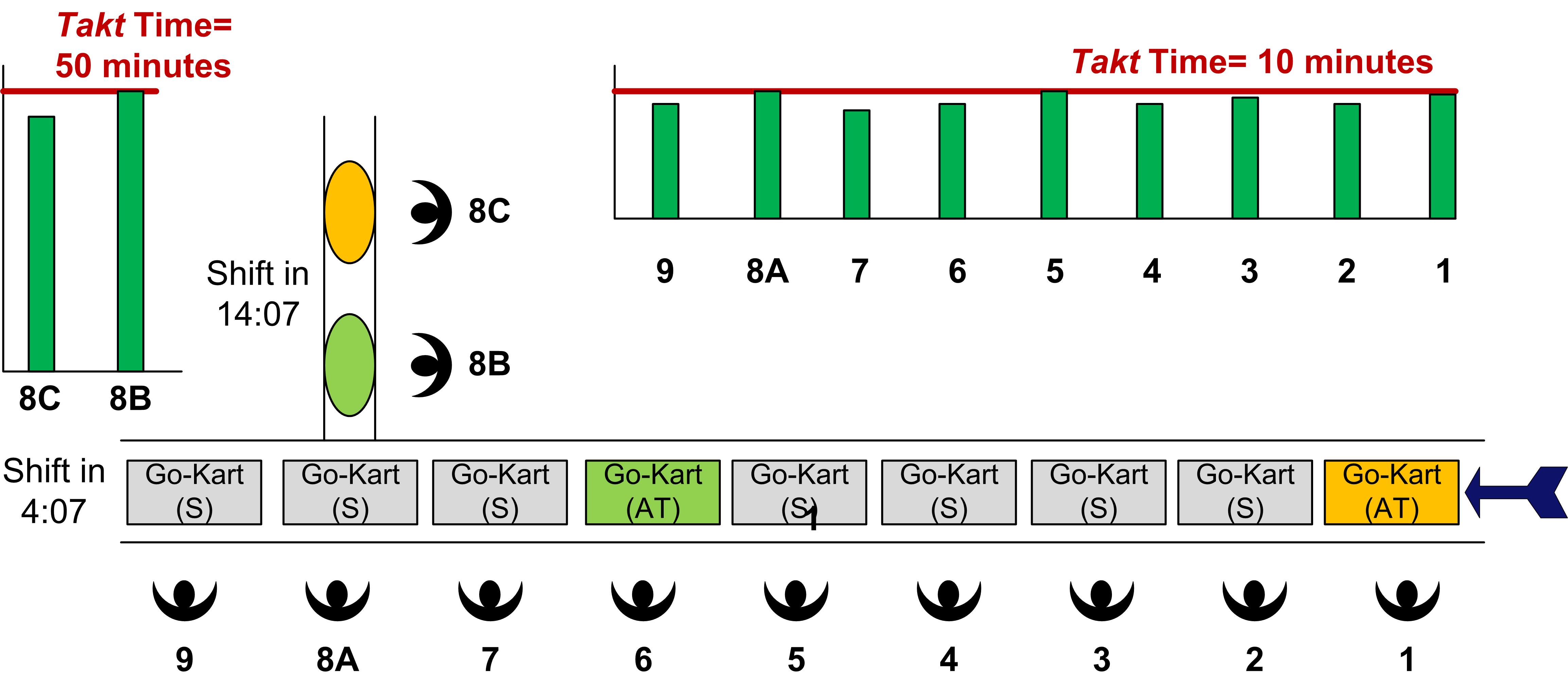
Feeder lines are a very specialized branch of a main assembly line. Generally, they are used when there is a different amount of work required for an option or for the most time intensive product on a mixed-model assembly line. Feeder lines will run on their own takt time. The demand on the feeder line is determined by the station that it supplies parts to. It will run at a different pace than the main Read more…

Zero Defects

Zero defects is a philosophy of Lean. It simply means that every process should be designed so that it is impossible to produce poor quality. The underlying premise, which is true in nearly every case, is that the cost of preventing problems is lower than the cost of fixing them. Zero defects is an unattainable goal. In practice, no company has ever achieved zero defects. Every company makes errors, and those errors contribute to the Read more…

12 Ways to Start Building a Continuous Improvement Culture (+Video)

Creating an organization that embraces continuous improvement is not easy. It takes strong, committed leaders who are willing to pay the up-front costs, and who resist the urge to harvest gains at the expense of future improvements. It takes a team that believes that when they make changes, they share in the rewards of their effort. It takes an underlying system that supports the people in the organization, and makes it easy for them to Read more…

11 “C’s” of Lean Leadership

Acronyms and other mnemonic devices help embed concepts into people’s brains. As it turns out, many of the key concepts of Lean leadership start with “C”, creating a unique way to look at this core tenet of continuous improvement. Interestingly, this term started as the 4 “C’s” of Lean leadership, but, with the input of many readers, has grown to the current 11 “C’s”. While this tool is not useful as an acronym in the Read more…

Predictability

At the heart of standardization is predictability. Standardization provides a predictable pace, predictable quality, and a predictable lead time. This predictability allows managers to make better plans. It allows marketers to make more accurate promises. And it allows employees to have a steady, reasonable pace throughout the day. Core Lean Concepts and Predictability Many of the core Lean concepts have predictability as their ultimate goal. Take 5S, for example. The concept of “a place for Read more…

Deming’s Great Lapse in Logic

I’m going to start out by saying that I fully expect to be blasted for this article. Challenging anything that Deming or Ohno or Shingo or Juran says is walking on thin ice in the Lean community. Despite that, I am going to do it anyway. Lately, I have been more aware of the numerous references to Deming in the online Lean community. Forums, blogs, and newsletters frequently make a reference to something that Deming Read more…

Live Online Training

Why Choose Live Online Training (Private Webinars)? At Velaction, we believe that you should have options in how you train your team. While face-to-face instruction is generally the most effective way to build skills in your team, it does have budget and logistics limitations. Whether you… only need a single class and don’t want to pay to bring in a trainer want to train in small doses to let information sink in want students to Read more…