Gotta Go Lean Blog

5 Principles of Lean

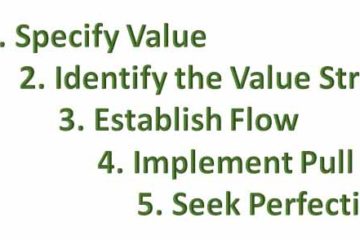
Lean principles are the guiding concepts that drive the basic behaviors of an organization. While many Lean advocates create their own unique set of principles, the most famous were first presented by James Womack and Daniel Jones in their book Lean Thinking. The 5 Principles of Lean Specify value. This is a critical step. To serve customers well, you have to understand how they define good performance. A common mistake is making assumptions about what Read more…

Yokoten

Yokoten is a Japanese term that loosely translates into “horizontal deployment”. Essentially, it is the spreading of information across the organization. A key point to this is that it is not just the result that is shared, but also the process that led to the result. Most organizations have numerous pockets of excellence. Unfortunately, though, in many cases that information is not shared. The company has to re-learn the same lessons over and over and Read more…

Value Stream Analysis

Value stream analysis is one of the steps in the value stream mapping process. The first step is to create a current state value stream map. This is simply a snapshot in time of the current conditions of an organization. Once the map is complete, however, you must decide what to do. There are two basic approaches to analyzing your value stream. The first is to identify all of the problems that you can find Read more…

Frontline Employees

Frontline employees are the people who do the ongoing production work in an organization. While the range and skills of frontline employees vary widely, most of the entry-level jobs within the company fall into this category. That is not to say all frontline jobs are entry-level. There are many senior production workers, especially among skilled fabricators and machine operators. The work that frontline employees do is most commonly characterized by repetition versus being project-based. This Read more…

Shojinka

Shojinka is a form of flexible manufacturing, where the number of workers vary to match demand requirements. This is obviously superior to a static system that staffs work areas without consideration for fluctuations in production requirements. Being able to reassign people to exactly where they are needed will help keep production areas from falling behind. This form of flexible staffing also releases people to work on improvement projects when demand is low across the board. Read more…

Nominal Conditions

A key requirement in a Lean operation is to make abnormal conditions stand out. Obviously, to recognize abnormal, you must also understand what normal is. Nominal conditions define your standard and let you see that you are operating within acceptable limits. Note that the term “nominal conditions” is not one that is in common use in the Lean community. Regardless, it is an important concept. The first key to knowing if something is operating within Read more…

RIPS Cycle

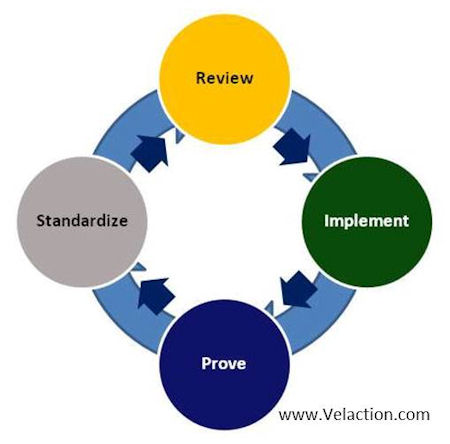
A variation of the Plan-Do-Check-Act cycle (AKA the Deming Cycle), RIPS stands for Review-Implement-Prove-Standardize, and is a proven method of continuously improving Standard Work and other forms of process standardization. Processes should not be static. There should be a constant scrutiny on how to make them better. The best people to do this are those that are most familiar with it: the frontline operators. In many cases, though, they are extremely familiar with their own Read more…

Setup Time

Setup time is the time it takes to reconfigure a machine to run a different part. Setup consists of two basic categories. Internal setup time. This type of setup time requires that a machine be shut down to do the tasks required to get ready for a different product. This is extremely wasteful as production comes to a grinding halt. External setup time. External setup tasks can be done while the machine is operating. Gathering Read more…

TIMWOOD

TIMWOOD is a mnemonic device used to help people remember the different forms of waste associated with Lean. These seven wastes are widely accredited to Taiichi Ohno. The TIMWOOD Acronym Transportation: Moving materials from one place to another is a waste of transportation. Inventory: Anything more than immediately necessary to work on is the waste of idle inventory. Motion: Excessive movements when performing work and walking are both forms of motion waste. Waiting: Many processes Read more…

Perfection

The concept of perfection provides one of the great philosophical quandaries of Lean. Like most continuous improvement disciplines, Lean promotes the relentless pursuit of waste reduction. It also pushes the concept of zero defects. The problem though, is that perfection is unattainable. No matter how good an operation becomes there is always room for further improvement. It can be confusing to people to be told on one hand they should be seeking perfection, but on Read more…

Appreciation (Employee Value)

Appreciation is the increase in value of an item over time. In most cases, physical things lose value over time. Clothing, electronic equipment, and most automobiles lose value from the moment they leave the factory. Some items, though, rise in value. One only has to look at an antique shop or peruse a few pages of collectibles on eBay to see this firsthand. The common denominator in appreciation is the scarcity of the item. The Read more…